↓ Skip to main content

Logsearch & Decker

·2 mins

Yesterday evening I headed up to the London PaaS User Group meeting as there were two Cloud Foundry related sessions on the agenda. First up was David Laing talking about the open source Logsearch project, a bosh deploy of an Elastic search ELK log analysis cluster. His employer (City Index) has this hooked up to Cloud Foundry system logs and, in some cases, they’re also using it for analysis of application logs with addition parsers. They’re looking for people to get involved in the project and help with the next phase: anomaly detection. One major hole in the solution as it currently stands: it’s only suitable for private PaaS as their is no access control over the logged data.

Up second was an entertaining pitch by Colin Humphreys, Founder and CEO of ours hosts CloudCredo, on how to sell hats to monkeys. That was the back story anyway, it was actually about how there is space in the stack for something that gives you the flexibility of IaaS over what you run but the simplicity of management, scaling and load balancing of PaaS. That something is Container as a Service. Specifically, the ability to push Docker files to Cloud Foundry using a custom stack for the DEA. Something that Colin is referring to as Decker.

Colin gave a nice demo but it is obviously still early days. Currently you can only push Docker files not images. There is also no staging at the moment - the image is created when each instance starts - consequently it is not taking any advantage of intermediate images. There is obviously lots of scope for improvement and it’s definitely one to watch. It was also interesting that Colin is currently focussing on the Docker side with the DEA interactions set to change with the introduction of Diego. The project is open source but Colin recommended waiting until he writes some docs before you try picking it up!
Related

Orienteering at Hursley

·2 mins
I’m using some vacation to catch up on a few blog posts (which I’m going to shamelessly back-date). The end of July saw the last in SOC’s Summer Series of events which was notable for a) actually feeling like Summer unlike most of the other events in the series, b) being on a new area: the IBM site at Hursley and c) being organised by me! Simon Bevan had done a great job of the map, building on some initial work by Charlie Richardson. Given the lack of traffic on the day, I think I had been overly cautious in marking all of the car parks as out of bounds which limited the shape of the courses. On the day, I also spotted a couple of places where I’d been a little careless with the overprint that meant route choices weren’t as clear as they should have been.

WebSphere Appliance Management Center

I haven’t posted anything product related since the release of WebSphere ESB 7.5 in June last year where I hinted at pastures new. Those of you that I’m connected to on LinkedIn will know that I subsequently became Technical Lead for a product called WebSphere Appliance Management Center. WebSphere Appliance Management Center provides off-box management and monitoring of multiple WebSphere DataPower SOA appliances. The development for the management component of the product moved to Hursley shortly after the initial release (named 4.0 after the coincident firmware release). The new team put together a fix pack later in the year which delivered support for the new Service Gateway XG45 appliance.

Racing at work

·1 min
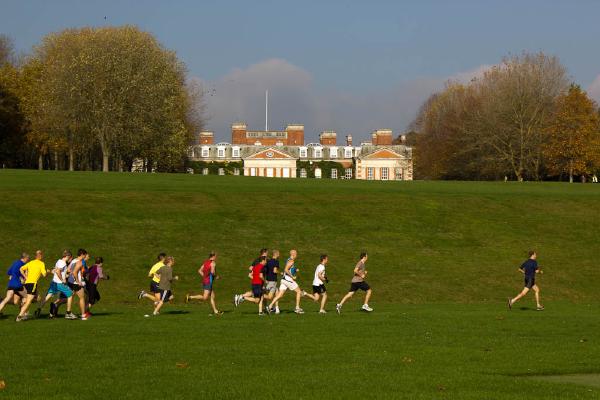
I’m going to be upfront - I’m about to do some gross back-dating of posts. This post is actually being written in January 2012 as I’ve been hopeless at blogging in the last couple of months of 2011 - not helped by having to re-instate a months worth of posts from Google’s cache when an enforced AWS reboot seemed to send my image back in time. Don’t expect volumes of text though: just a few words and an excuse to link to some photos. The one’s about the running race that I organised at work as part of the inter-departmental games. It was three laps adding up to (approximately) 5km. There was a good turnout, helped by the . I got a bit of stick for being too far out in front although still took 19:15 (the course did have a few hills). It actually transpired that I wasn’t far enough ahead as, having applied the World Masters 5k grading (my rules), I actually ended up back in 4th place. One way to look at it is that I don’t need to get faster - I just need to get older and not get slower! Andy Piper did a nice write-up on eightbar.